Reflux in Babies
Reflux is one of the most common reasons mums bring their babies into our practice. Frequent possetting, arching, unsettled feeds, discomfort when lying down, or a baby who just can’t seem to relax.
What’s often overlooked is that for many babies, reflux isn’t primarily a gut issue. It’s a nervous system one.
Birth can be a baby’s first major stress
For a newborn, birth is often the biggest physical stress their body has experienced. Even when everything goes “well”, the process can place significant strain on a baby’s head, neck, and nervous system.
Prenatal stress can also play a role. A baby’s nervous system develops in utero, responding to the environment it’s growing in. By the time a baby is born, their nervous system is already primed to handle the stresses you’ve been experiencing.
These early stresses are usually overlooked when addressing reflux.
A simple way to understand reflux
We often explain this using a developmental hierarchy.
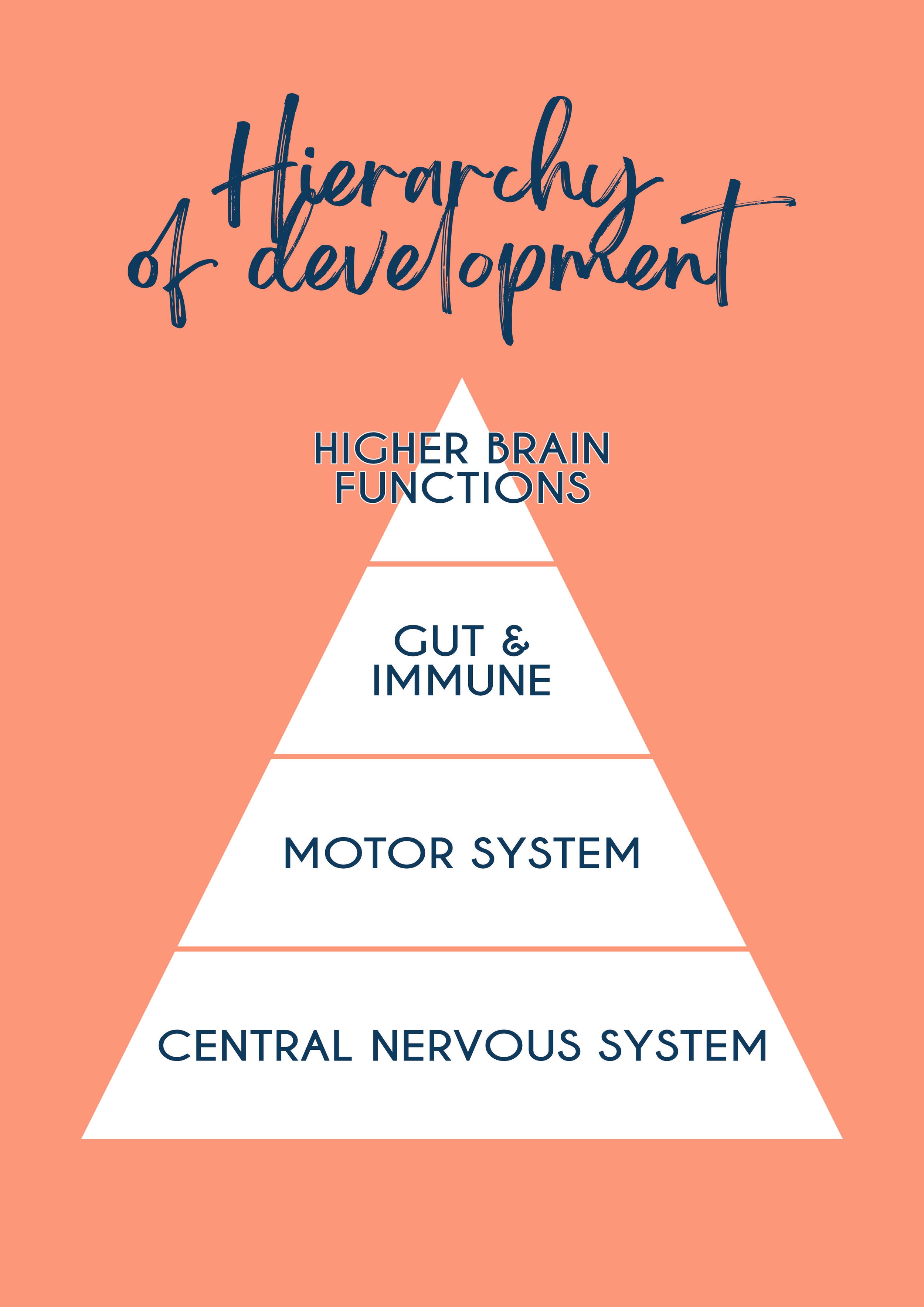
The first system to develop is the central nervous system. Next comes the motor system, followed by the gut and other organs. Higher brain functions, such as emotional and social regulation, develop later.
When a baby is overwhelmed or overstimulated, their nervous system may remain in a fight or flight state. In this state, digestion is not a priority. The body is focused on survival, not feeding or settling.
This is why many reflux babies also appear tense, unsettled, difficult to soothe, or constantly wound up. The gut is simply responding to a stressed nervous system.It also explains why treating the gut may help a little bit, but not fully, because treating the gut is missing the underlying cause - the central nervous system.
The role of the upper neck and vagus nerve
The vagus nerve plays a key role in digestion and calming the body. It exits the brainstem near the occiput and the top of the cervical spine (upper neck).
Stress or tension in this area, often related to birth trauma, can influence how effectively the nervous system regulates digestion. This doesn’t mean something is “damaged” or pathological, but it can be more functional - meaning that the system is working harder than it needs to.
Rather than focusing only on the stomach, we look at how the nervous system is operating overall.
Chiropractic for babies
In our practice, we use NeuroThermal scanning to assess patterns of nervous system stress. It is safe and simple to use, even on new babies. It gives us insight into how a baby’s nervous system is responding and adapting.
Chiropractic care for babies is very gentle. There is no cracking or force involved. Care focuses on supporting the nervous system and relaxing the tension in the body, so it can move into a calmer, more organised and relaxed state.
A different perspective on reflux
Chiropractic supports nervous system regulation, which is foundational for digestion to function well.
When a baby’s nervous system is calmer, feeding, digestion, and settling often have the opportunity to become easier.
At Hands on Health Chiropractic, we support babies and mums by addressing nervous system stress early, gently, and with respect for how beautifully adaptable the body is.
References:
Gill, S., & Gill, A. (2022). Resolution of gastro-esophageal reflux disorder in an infant following chiropractic care: A case study. Journal of Pediatric, Maternal & Family Health – Chiropractic, 22-25. Retrieved from:
Dukovac, N., Postlethwaite, R., & McIvor, C. (2022). Resolution of infant reflux concomitant with chiropractic care: A series of 5 cases. Asia-Pac Chiropr J. Retrieved from:
https://apcj.net/Papers-Issue-3-2/#DukovacInfantReflux
Alcantara, J., & Anderson, R. (2008). Chiropractic care of a pediatric patient with symptoms associated with gastroesophageal reflux disease and related syndromes. Journal of the Canadian Chiropractic Association, 52(4), 248-255.